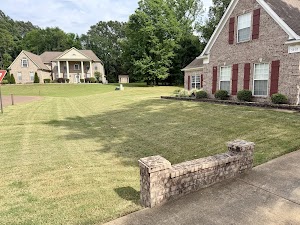

A Thick, Green, Weed‑Free Lawn in Lakeland, TN
8 professional treatments a year, and a city with a 6‑inch grass rule. Free service calls between visits.
Veteran‑Owned, Licensed in Tennessee, Serving Lakeland Since 2006
Plans from $30.90 / Month
Or $46.35 per treatment, free, exact quote in minutes.
Get My Free Quote
Trusted by homeowners across Lakeland & northeast Shelby County
Our 8‑Application Program, Timed for Lakeland
Timing is most of the job, and West Tennessee runs weeks ahead of the rest of the state. These windows come from University of Tennessee research for our end of the state, not a national calendar.
Visit 1 · Jan, Feb
We clear out winter weeds, chickweed, henbit, deadnettle, and sticker weed, while they are still small, and lay down a barrier that stops spring weeds before they come up.
Visit 2 · Feb, Mar
Crabgrass prevention. UT Extension puts the West Tennessee window at late February to early March, weeks ahead of the rest of the state. On Lakeland’s slopes this one matters twice, because crabgrass takes the thin, dry high ground first.
Visit 3 · Apr, May
First feeding of the year. With Lakeland still adding brand‑new homes, a lot of these lawns are sitting on graded subsoil, so this visit is about building the ground back up as much as it is about color.
Visit 4 · May, Jun
Round two of weed prevention, about six weeks behind the first, so the barrier holds through summer. Plus feeding and nutsedge control.
Visit 5 · Jul, Aug
Summer feeding built for our heat, using a slow‑release product so it feeds steadily instead of burning. On sloped ground, slow‑release is also what keeps it from washing to the bottom of the hill.
Visit 6 · Sep, Oct
Winter weed prevention. UT’s target is late August, before soil temperatures drop through 70 degrees, that is when annual bluegrass starts germinating. Miss it and you have it all winter.
Visit 7 · Oct, Nov
Fall follow‑up plus disease prevention. Fall is when large patch infects zoysia and spring dead spot takes hold in bermuda. Both show up the following spring, when it is too late to prevent either one.
Visit 8 · Nov, Dec
Lime. Native ground here runs sour, below what UT says lawns want. Sour soil keeps grass from using the fertilizer you already paid for.
Plans from $30.90 / Month
Or $46.35 per treatment. Every Lakeland lawn is measured and priced to size, which matters in a city zoned for everything from small cottage lots to five‑acre farms. Free service calls between visits.
Why Lakeland Lawns Behave the Way They Do
Lakeland is really two kinds of property in one city. It has the steepest ground in northeast Shelby County and a big share of low, wet creek bottom, often within a mile of each other. And it is zoned for everything from five‑acre farms down to small cottage lots.
The Steepest Ground Around Here
Lakeland has hillsides that run genuinely steep by Shelby County standards. Water sheds off before it soaks in, so the tops and middles of slopes brown out first in July, granular product washes downhill in a hard rain, and mowing gets dicey. Watering has to be split into shorter cycles here.
And a Lot of Low, Wet Ground
Close to four in ten acres in Lakeland are creek bottom along the drainageways. Those are the yards that stay soggy, green up late in spring, rut under a mower, and grow moss and sedge instead of grass. Same city, opposite problem from the hillsides.
Six Inches, and They Mean It
Lakeland’s city code caps grass at six inches on residential property and twelve on commercial, with a separate nine‑inch rule for fenced areas and corner lots that front two streets. It is one of the tighter grass rules in the metro.
Five‑Acre Farms Inside the City Limits
Lakeland is zoned all the way from five‑acre agricultural down to small cottage lots, and the large‑lot districts are explicitly allowed to be on septic rather than city sewer. It is one of the few cities around here where a horse property and a subdivision lot share a zip code.
Still Building
Lakeland has the highest share of brand‑new homes of any city in northeast Shelby County, and it grew while the county as a whole lost population. New sod on graded ground is the most fragile lawn there is, it lives off the sod farm for one season, then has to root into whatever the builder left.
A Hard Layer Under a Lot of It
Roughly a third of Lakeland sits on ground with a dense layer roots cannot push through, about two feet down. Winter rain perches on it; in July the shallow soil above it runs dry fast. Aeration does more good here than another bag of fertilizer.
What Grows Well in Lakeland
Tennessee sits in what UT Extension calls the transition zone, one of the hardest regions in the country to grow grass. On a Lakeland property, which grass is right often depends on which part of your own yard you are standing in.
Bermudagrass
The right call on open, sunny Lakeland lots, tough, fast to recover, and the best heat and drought tolerance we can grow. Fast recovery matters on a slope, where thin spots turn into washouts. UT rates its shade tolerance as low: six or more hours of direct sun.
Zoysia
Finer and denser than bermuda, handles two to four hours of sun or filtered light all day, and needs less nitrogen. A better fit than bermuda on the shadier, older parts of town.
The Wet Corners Need a Different Plan
On the creek‑bottom ground, drainage is the limiting factor, not fertilizer. UT is direct that sedges in poorly drained soil only stay gone once the water is dealt with. We will tell you that instead of selling you the same treatment four times.
Our Calendar Is Not Nashville’s
UT Extension separates West Tennessee from East Tennessee by weeks on weed prevention alone. General advice, and most statewide advice, is late for Lakeland.
Test, Do Not Guess
UT does not publish a blanket fertilizer rate for Tennessee lawns; it routes homeowners to a soil test. On a property that runs from hilltop to creek bottom, that is not a formality.
It was all weeds when I moved in, and after being treated, I have no weeds in my yard at all.
Michelle H. · Lawn Jox customer
Why Lakeland Homeowners Choose Lawn Jox
Free Service Calls
Our job is to make sure your lawn is beautiful all season long. If you think there is something wrong with your lawn, call us. The inspection is free.
Professional, Uniformed Crews
Just like your lawn, we have standards with our appearance as well. All of our lawn care technicians are uniformed and professional.
Licensed in TN, MS & AR
Treating a lawn for hire in Tennessee takes more than a mower. The state requires a Department of Agriculture charter for the business, one per location, plus a licensed supervisor and certified applicators, backed by a bond and liability insurance. Ask anyone else working your street for their charter.
Electronic Quotes & Invoicing
We save on paper and make it easy to pay. With our electronic system, you’ll receive quotes and invoices on your devices so you can accept bids and pay invoices all online.
Lakeland Lawn Care, Common Questions
Straight answers on the grass ordinance, acreage, timing, and licensing.
How much does lawn treatment cost in Lakeland?
Our program starts at $30.90 a month, or $46.35 per treatment if you would rather pay per visit. Lakeland lots range from small to five acres, so we measure yours and give you an exact number, free, and usually in a few minutes.
What is Lakeland’s grass height rule?
Six inches on residentially zoned property and twelve inches on commercial. There is also a nine‑inch limit for fenced areas and for lots that front two streets. Conservation easements and designated natural areas are exempt.
Do I have to sign a contract?
Yes. Our plans run on an annual service agreement. Full terms, including renewal and cancellation, are on our Terms of Service page.
I have two acres or more. Do you handle that?
Yes. Lakeland is zoned from five‑acre agricultural down to small cottage lots, and we price by measured size rather than a flat residential rate.
My yard is green at the bottom and brown at the top. Why?
Lakeland has the steepest ground in this part of the county. Water runs off the high side before it soaks in, so the top dries out first and stays hungry. Aeration, split watering cycles, and slow‑release feeding fix that, more fertilizer does not.
My sod looked great last year and terrible this year. What happened?
That is the second‑season drop. When the lot was graded, the good topsoil went with it, and the sod lived off what came with it the first year. The second year it has to root into packed subsoil. Aeration and steady feeding turn it around.
When does weed prevention need to go down?
UT Extension puts the West Tennessee crabgrass window at late February to early March, before the last forsythia bloom falls, and the winter weed application in late August, before soil temperatures drop through 70 degrees.
What areas around Lakeland do you serve?
Lakeland, Arlington, Bartlett, Cordova, Eads, Germantown, Collierville, and Memphis, plus our home base across the line in DeSoto County, Mississippi.


What I also appreciated was how efficient and respectful the team was while on-site. No mess left behind, everything was cleaned up, and they made sure the yard looked better than they found it.
Overall, excellent service from start to finish. Reliable, professional, and they deliver exactly what you’d expect—and more. Can’t wait until my next service provided by Lawn Jox and would recommend them to anyone looking for quality lawn care.