
Why Isn’t My Bermuda Greening Up?
Dead Circles That Show Up When Everything Else Turns Green
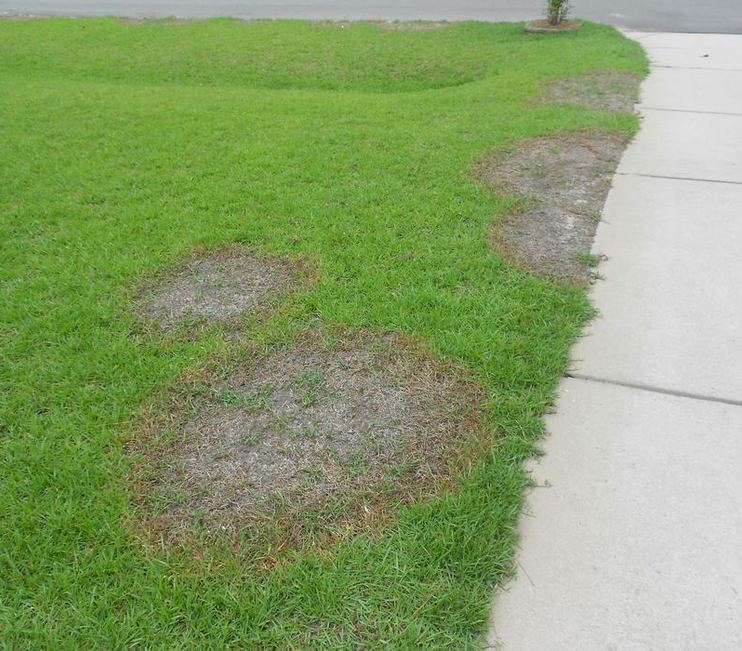
Your bermuda comes out of dormancy in spring, except for the parts that do not. Roughly circular patches stay brown and flat while the rest of the yard greens up around them. Pull at one and the runners come up easily, blackened and rotted at the root.
That is spring dead spot, and it is the most damaging disease of bermudagrass in north Mississippi. The frustrating part is that by the time you can see it, the damage is months old. The fungus infected the roots the previous autumn and worked through the winter while the lawn was dormant. Spring is simply when you find out.
It will not spread further through the summer, and healthy bermuda creeps back into small patches on its own. Large patches leave bare ground that crabgrass and nutsedge move straight into.
We Treat Spring Dead Spot. The fungicide timing that stops next spring’s patches happens this autumn. Ask us before the window closes.
How to Tell It Apart
Spring dead spot gets blamed on winter kill, on grubs, on the mower. Here is what actually distinguishes it.
Circles, Not Streaks
Roughly round patches from a few inches to several feet across, often in the same spots year after year. Straight lines or wheel tracks point at something mechanical instead.
Visible Only at Green-Up
It appears as the lawn breaks dormancy in spring. Brown patches in mid-summer bermuda are usually something else entirely.
Black, Rotted Runners
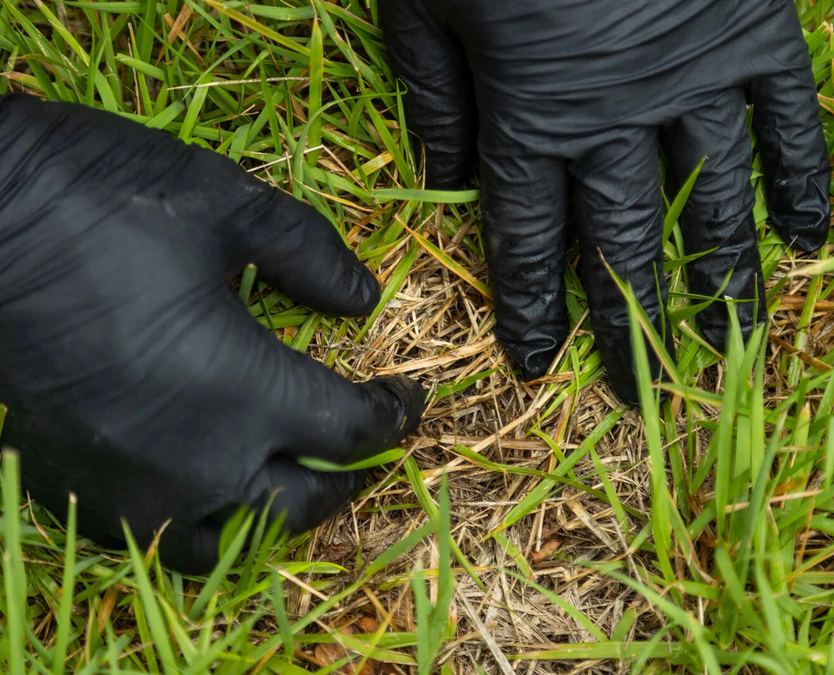
Pull a runner at the edge of a patch. Spring dead spot leaves roots and stolons dark and decayed. Grub damage lifts like loose carpet with no root at all.
Worse on Established Lawns
It shows up most on well-established bermuda, typically three years old or more, and often where thatch has built up.
Treated in Fall, Not Spring
The infection happens in autumn. Fungicide applied in spring, once you can see the damage, is already too late for that year.
Made Worse by Heavy Thatch
Thatch much over three quarters of an inch holds moisture at the crown and favors the fungus. Aeration is part of the answer.
What Fixes It
Lawn Disease Control
Fall fungicide timing is what actually prevents next spring’s patches. This is the service that handles it.
Core Aeration
Reduces the thatch and compaction spring dead spot thrives in, and helps damaged areas fill back in.
Fertilization & Weed Control
Balanced feeding, and weed pressure kept off the bare patches while the bermuda creeps back.
Why Choose Lawn Jox?
Free Service Calls
Our job is to make sure your lawn is beautiful all season long. If you think there is something wrong with your lawn, call us. The inspection is free.
Right Size Equipment
Lawn Jox started with push mowers and we still have them. We use the right sized equipment for the right job, optimizing our time and lowering your cost.
Professional, Uniformed Crews
Just like your lawn, we have standards with our appearance as well. All of our lawn care technicians are uniformed and professional.
Fully Licensed & Insured
As a fully licensed & insured lawn care company in the state of Mississippi, Tennessee, and Arkansas, we make sure your assets are protected while on your property.
Electronic Quotes & Invoicing
We save on paper and make it easy to pay. With our electronic system, you’ll receive quotes and invoices on your devices so you can accept bids and pay invoices all online.
No Contracts
Nothing to sign and no minimum term. Your program carries over each year so the spring pre-emergent is never missed, and you can stop any time by calling or texting the office.